
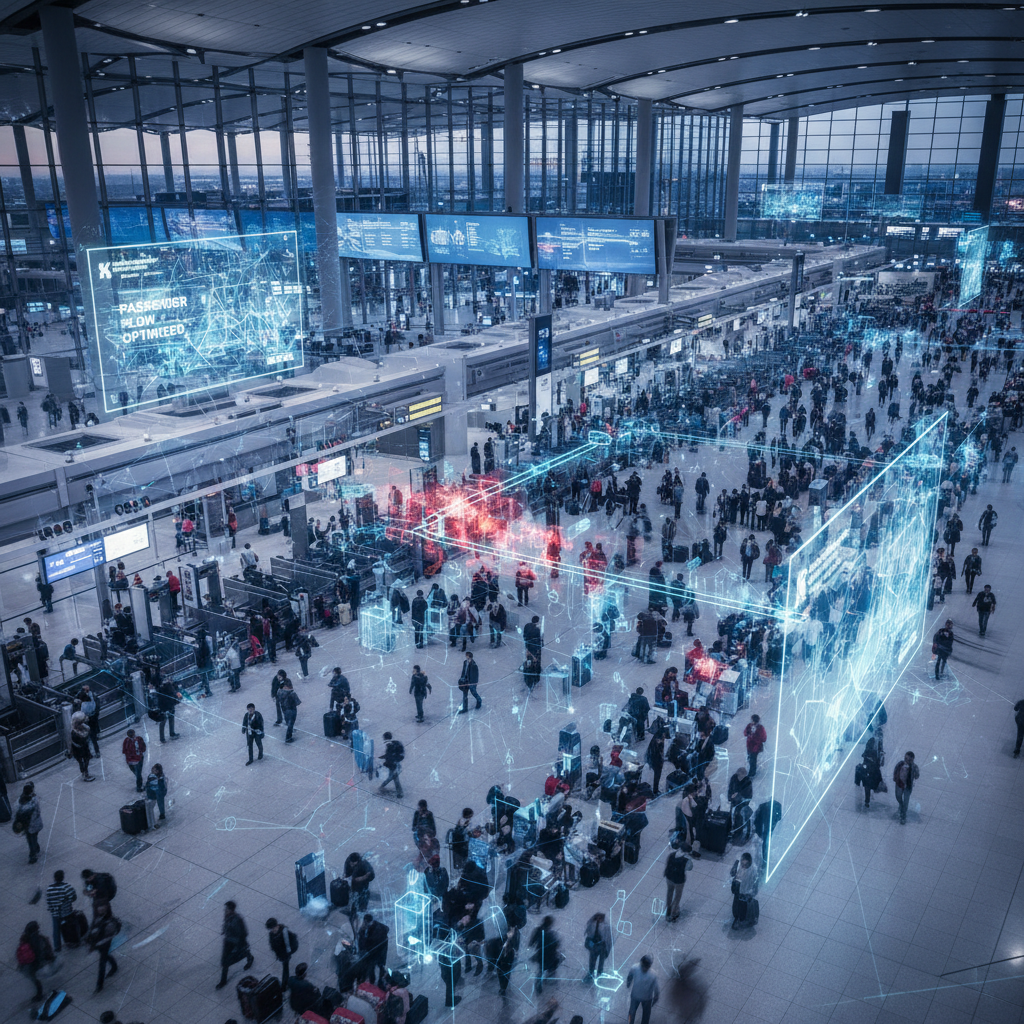
Reimagining Passenger Flow: Why Airports Must Shift from Reactive to Predictive Operations
Today's airports are under enormous pressure. Growing passenger numbers, tighter security requirements, and expectations for seamless experiences are clashing with ageing infrastructure. What if airports could see crowds before they form?
Today's airports are under enormous pressure. Growing passenger numbers, tighter security requirements, and expectations for seamless experiences are clashing with ageing infrastructure and unpredictable flow patterns. Traditional methods - adding more staff, building more gates - are hitting their limits.
But what if airports could see crowds before they form? What if systems could anticipate bottlenecks and resolve them - minutes before passengers even notice?
This is the promise of predictive passenger flow management. And it's no longer a concept. It's here.
The Problem with Reactive Operations
Most airport operations still function in reactive mode: teams respond after queues build up, after delays cascade, after complaints rise. It's a model inherited from decades ago - designed for smaller volumes and lower expectations.
In practice, this means:
- Security checkpoints that become choke points during morning rush
- Gate areas that overflow because of a delayed departure
- Retail zones that sit empty while passengers queue elsewhere
- Staff deployed where they were needed an hour ago - not where they're needed now
The cost is significant: operational inefficiencies, passenger dissatisfaction, missed flight connections, and revenue lost in underused commercial areas.
What Predictive Flow Management Looks Like
Predictive flow management is built on one principle: anticipate, don't react.
Using real-time data from cameras, Wi-Fi signals, boarding systems, and flight schedules, predictive systems model how passengers will move through the terminal - before they do.
Here's how it works:
- Live Movement Tracking: AI-powered vision systems track anonymised passenger movement across the terminal. No personally identifiable data is stored - only movement patterns and densities.
- Forecasting Algorithms: Combining real-time data with flight schedules, historical trends, and external factors (e.g. weather, events), the system predicts where crowds will form in the next 15, 30, or 60 minutes.
- Automated Alerts and Recommendations: Operations teams receive real-time notifications along with suggested actions.
- Integration with Airport Systems: The best systems connect directly to signage, PA systems, mobile apps, and staff allocation tools.
SmartFlow: Predictive AI for Modern Airports
AVA-X's SmartFlow was built specifically to solve this problem. Key capabilities include:
- Real-Time Passenger Counting and Flow Analysis
- Predictive Queue Modelling
- Heat Maps and Density Alerts
- Automated Operational Triggers
- Privacy-First Architecture
Why Airports Are Moving Now
The shift to predictive operations isn't just about efficiency - it's about survival. Passenger expectations have changed. Travellers now compare their airport experience to the seamless service they get from apps, hotels, and e-commerce.
Conclusion: The Future of Airport Operations
Airports that embrace predictive flow management won't just run more smoothly. They'll unlock new possibilities: better retail performance, more efficient security, happier passengers, and smarter use of every square metre.
SmartFlow by AVA-X is one answer. And for airports looking to stay ahead, the time to act is now.
Next step
Ready to see AVA-X in action?
Talk to our team about deploying sovereign AI video analytics for your security operations.